

Stop defining scale purely by keyword count. True scalability depends on whether your core bottleneck is technical data ingestion or human analysis.
When choosing between a rank tracking API vs rank tracking software, the right choice depends entirely on your operational architecture. Rank tracking software scales operational workflows. It allows marketing teams to immediately monitor, interpret, and report on visibility changes without engineering support. A rank tracking API scales programmatic pipelines. It enables developers to seamlessly inject raw ranking intelligence into custom products, AI agents, or internal data warehouses. Enterprise operations typically deploy a hybrid model to achieve both.
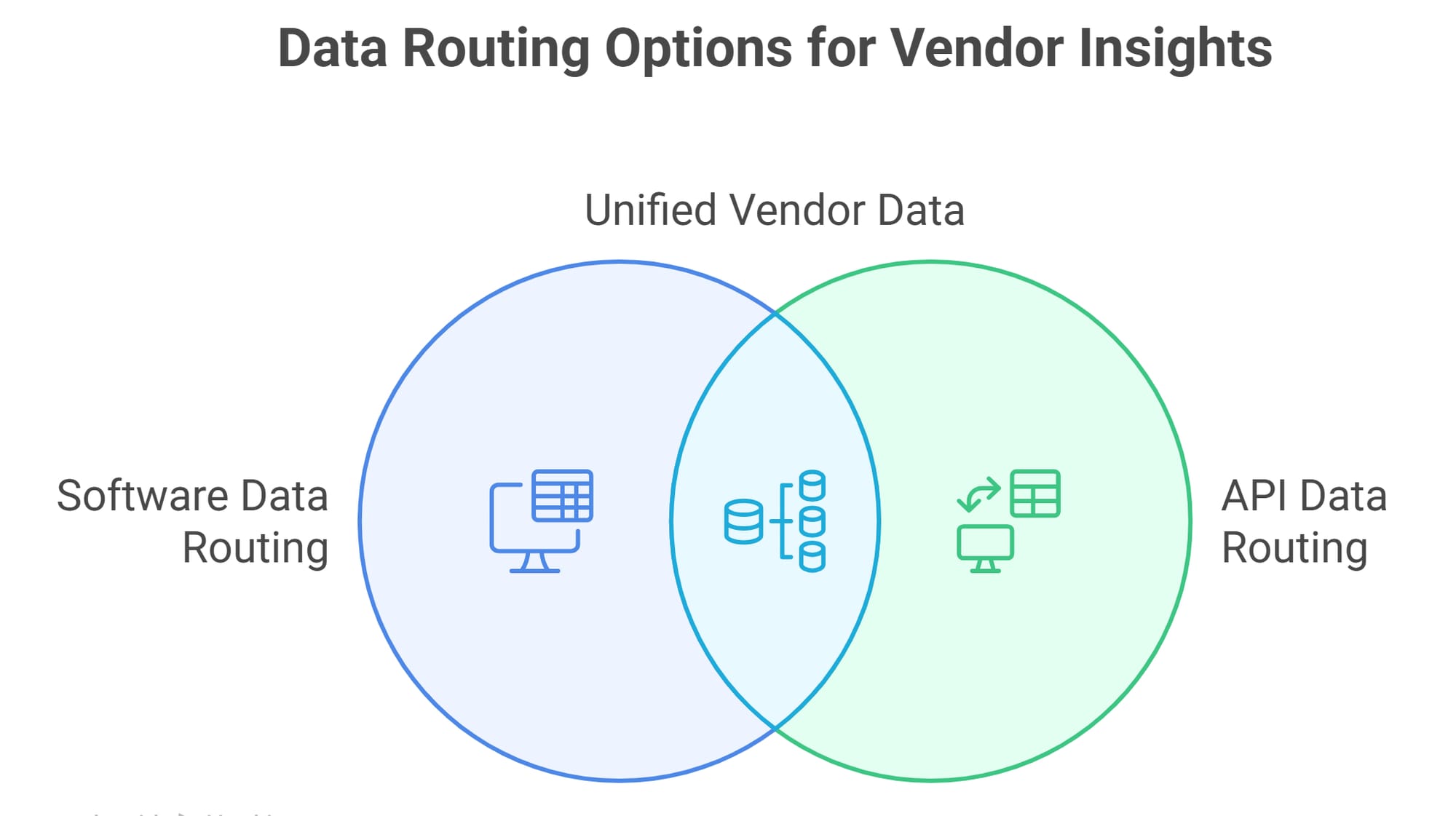
SERP API vs Rank Tracker
Category confusion guarantees wasted budgets. Distinguish raw data collection from structured presentation before making infrastructure decisions.
What is a rank tracking API?
A rank tracking API delivers structured, historical search engine ranking data directly to your systems. The vendor manages the tracking logic, device splits, and proxy rotation. You use it to power internal dashboards, analytics pipelines, or SaaS products.
What is rank tracking software?
SEO rank tracking software is a fully packaged SaaS platform featuring a graphical interface, automated alerting, and visual reporting. The vendor handles both data collection and the presentation layer, making it the immediate choice for SEO agencies and marketing teams.
What is the difference between SERP API and rank tracker?
A SERP API returns raw HTML or parsed JSON of search results for a specific query. You must build your own historical tracking logic and database. A rank tracker delivers finished, longitudinal ranking intelligence.
Key Takeaway: Buying a raw SERP API when you need structured rank tracking creates massive technical debt. You are buying raw materials instead of a finished product.
What "Scale" Actually Means in Modern SEO Operations
Most teams calculate scale linearly using a basic formula of keywords multiplied by search engines and locations. The 2026 search landscape requires a more resilient definition.
Operational vs Programmatic Scalability
Operational scalability: Dictates how efficiently your human team can QA anomalies, generate reports, and translate data shifts into business strategy. Software dominates this requirement.
Programmatic scalability: Dictates how efficiently your infrastructure can ingest, transform, and route massive datasets across your business. APIs dominate this requirement.
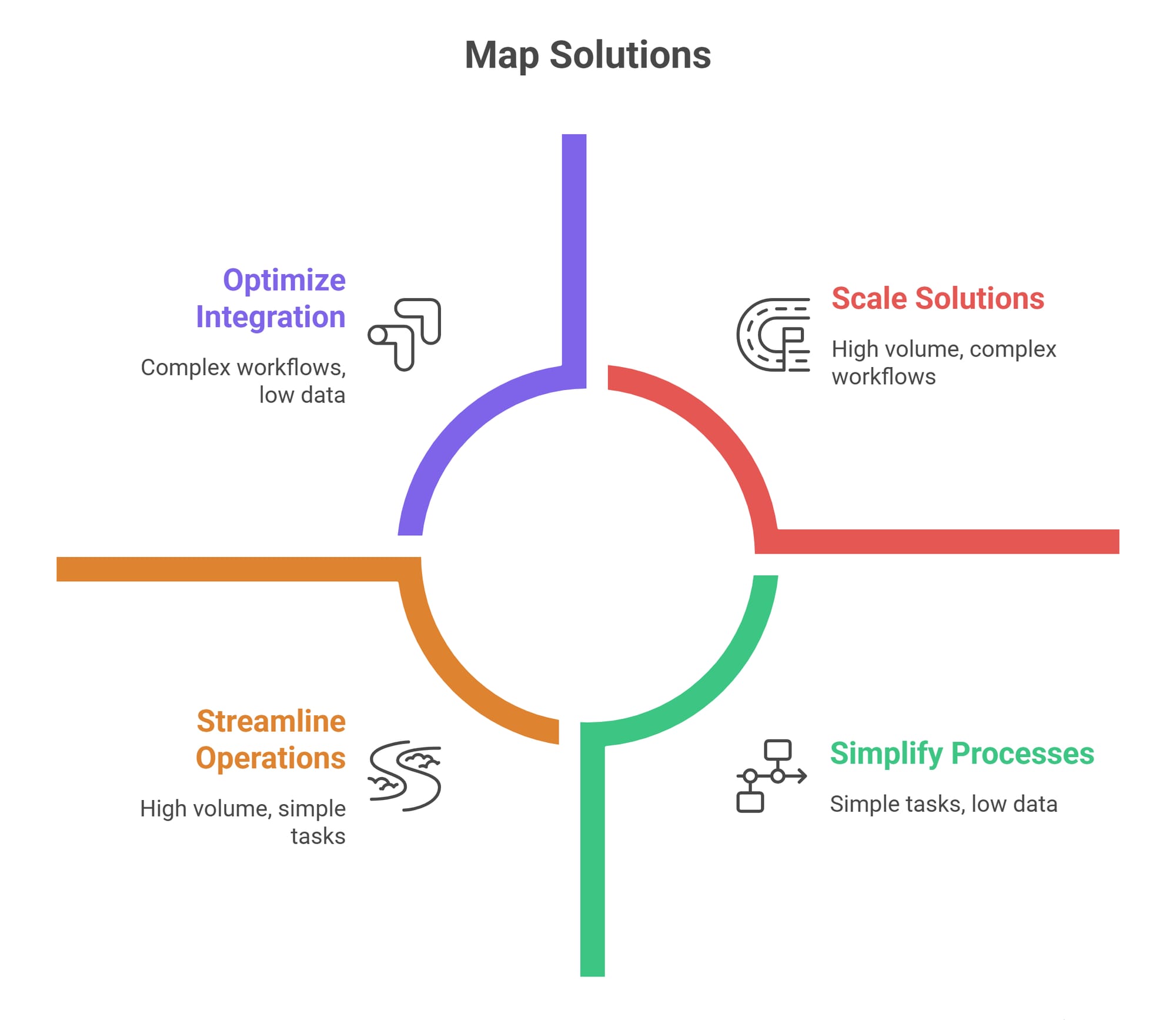
Tracking Resilience in the AI Era
Rank position no longer guarantees traffic.
- Ahrefs confirmed in February 2026 that AI Overviews correlate with a 58% drop in position-one organic click-through rates.
- Seer Interactive found in November 2025 that organic CTR crashes 61% when AI Overviews appear on informational queries.
Tracking ten blue links is insufficient. A scalable tracking solution must now ingest zero-click metrics, pixel visibility, and Large Language Model citations. If your stack cannot track AI brand visibility alongside organic rank, it will not scale into the future.
API vs Software: The Core Trade-Offs
| Approach | Ease of Use | Automation Focus | Flexibility | Scalability Ceiling | Best Fit |
|---|---|---|---|---|---|
| Rank tracking software | Immediate | Routine reporting | Rigid | High operational | SEO teams, agencies |
| Rank tracking API | Requires dev | Event-driven triggers | Limitless | High programmatic | SaaS products, data engineers |
| SERP API | Complex | Custom built pipelines | Extreme | Infinite raw volume | AI agents, custom scrapers |
| Hybrid stack | Moderate | End-to-end | High | Enterprise | Large brands, multi-market |
Engineering Cost vs Subscription Cost
APIs generally charge per-query, while software charges per-keyword tier. However, APIs carry hidden Total Cost of Ownership variables like database storage, ETL pipeline maintenance, and QA engineering.
For example, SERP APIs like SearchCans offer raw query access for as low as $0.56 per 1,000 requests, whereas enterprise providers command much higher rates. The raw API unit cost ignores the engineering hours required to build the tracking application on top of it. Agencies favor software because it guarantees predictable subscription spend.
Data Ownership Portability
Software walls off your historical data. If you change vendors, migrating years of keyword history is notoriously painful. APIs enforce strict data ownership. You store the history on your own servers or warehouses (like BigQuery or Snowflake), ensuring absolute portability.
Two Stress Tests Exposing Fragile Stacks
You only discover true scalability when search engines change their rules.
- The
num=100CollapseIn September 2025, Google disabled thenum=100URL parameter, which historically allowed scrapers to pull 100 results per request. This single technical shift broke extraction pipelines worldwide. Tools suddenly had to make 10x more requests to fetch deep SERP data, ballooning infrastructure costs. Agencies like Logical Position and Zeo reported overnight disruptions to historical data continuity. If you rely on a raw SERP API, you must absorb these breaking changes and query cost spikes yourself. Rank tracking software vendors handle the adaptation quietly. - The Shift to Generative SearchLegacy rank tracking software struggles to parse dynamic, personalized AI Overviews. APIs allow data engineers to quickly modify JSON schemas to extract net-new SERP features before legacy software vendors update their user interfaces.
When to Use a Rank Tracking API Instead of Software
Do not over-prescribe APIs. Only adopt an API-first approach under specific technical triggers.
- Product-Led SEO: Your rankings power customer-facing dashboards or user alerts within your own SaaS product.
- Infrastructure Integration: Ranking data must map directly against internal sales data or CRM metrics inside a warehouse.
- Custom Tooling: You are building bespoke internal SEO software because commercial tools fail your specific edge cases.
Where Olostep Fits
When web data collection evolves from simple rank tracking to complex workflow automation, infrastructure matters. Olostep provides powerful upstream web data infrastructure for batch retrieval and structured extraction. It is not rank tracking software. It is the automation-first foundation required when API-driven web intelligence becomes mandatory for your operation.
When Rank Tracking Software is the Right Default
Speed-to-value dictates software adoption.
- No Dedicated Developers: If marketing owns the budget and the execution, software prevents engineering bottlenecks.
- Client Reporting Complexity: SEO agencies managing 50+ clients need out-of-the-box white-labeled PDFs and localized dashboards.
- Routine Monitoring: If your primary need is automated weekly ranking drops alerts, software accomplishes this in three clicks.
TL;DR Summary Box:
- Lean Software if rankings support your ongoing SEO workflow.
- Lean API if rankings live inside your product or data stack.
- Lean Hybrid if you require both immediate visual monitoring and raw data portability.
Why Hybrid Stacks Scale Best for Enterprise
Mature organizations utilize a three-layer hybrid architecture.
- Monitoring Layer (Software): Delivers fast, visual alerting for the marketing team without blocking data engineering.
- Warehouse Layer (API): Pushes raw keyword data into BI tools for deep cross-channel analytics.
- AI Visibility Layer: Future-proofs performance by tracking LLM citations and pixel presence.
Hybrid success relies on strict boundary management. Clearly define who owns the scraping logic, where historical data lives, and who manages the reporting presentation.
FAQ
What is a rank tracking API?
A rank tracking API delivers structured ranking data programmatically directly to your servers. It acts as the data layer for custom internal dashboards, analytics pipelines, or SEO SaaS products.
What is rank tracking software?
Rank tracking software is a packaged application providing a user interface, visual charts, and automated reporting. It enables marketing teams to track visibility without needing data engineers.
When should you use a rank tracking API instead of software?
Use an API when ranking data must feed downstream tools, data warehouses, or user-facing product features. Use software when the primary goal is human analysis and recurring client reporting.
Is API-based rank tracking more scalable?
API-based tracking scales better programmatically for massive, complex datasets. However, software scales better operationally, allowing lean marketing teams to interpret data without technical bottlenecks.
What is the difference between SERP API and rank tracker?
A SERP API provides raw HTML or JSON search engine results, forcing you to build the tracking logic. A rank tracker provides fully processed, historical visibility metrics ready for analysis.
How do agencies track thousands of keywords?
Most agencies rely on scalable rank tracking software or hybrid setups to manage thousands of keywords. Software guarantees predictable margins and eliminates the heavy engineering costs associated with building raw API pipelines.